Being born in the Isle of Man, I was always intrigued to find out more information about famous people connected with the Island. One that sprung to mind was the name Christian, a popular surname there. A famous movie that most have seen was “Mutiny On The Bounty” and a name associated with the film was indeed, Fletcher Christian. So, looking at the available information, Fletcher Christian was born on 25 September 1764, at his family home of Moorland Close, Eaglesfield, near Cockermouth in Cumberland, England. However, Fletcher’s father’s side had originated from the Isle of Man and most of his paternal great-grandfathers were historic Deemsters and their original family surname was, McCrystyn.
Fletcher had two brothers, Edward and Humphrey, all sons of Charles Christian of Moorland Close and of the large Ewanrigg Hall estate in Dearham, Cumberland. Charles Christian was an attorney-at-law descended from Manx gentry, and his wife Ann Dixon.
Charles’s marriage to Ann brought with it the small property of Moorland Close, “a quadrangle pile of buildings … half castle, half farmstead.”
The property can be seen to the North of the Cockermouth to Egremont A5086 road. Charles died in 1768 when Fletcher was almost 4 years-old. Ann, unfortunately, proved herself grossly irresponsible with money. By 1779, when Fletcher was fifteen, Ann had run up a debt of nearly £6,500 (equal to £880,014 today), and faced the prospect of debtors’ prison. Moorland Close was lost and Ann and her three younger children were forced to flee to the Isle of Man, back to their relative’s estate, where English creditors had no power.
The three elder Christian sons, managed to arrange a £40 (equal to £5,415 today) per year annuity for their mother, allowing the family to live in genteel poverty. Christian spent seven years at the Cockermouth Free School from the age of nine. One of his younger contemporaries there was Cockermouth native, William Wordsworth. It is commonly suggested that the two were “school friends”; in fact, Christian was six years older than Wordsworth. His mother Ann died on the Isle of Man in 1819.
Fletcher Christian began his naval career at the age of 17 when he joined the Royal Navy as a cabin boy. At that time, the average age for this position was between 12 to 15. He served for over a year on a third-rate frigate along with his future commander, William Bligh, who was posted as the ship’s sixth Lieutenant. Christian next became a Midshipman on the sixth-rate post ship HMS Eurydice and was made Master’s Mate six months after the ship put to sea. The muster rolls of the HMS Eurydice indicate Christian was signed on for a 21-month voyage to India. The ship’s muster shows Christian’s conduct was more than satisfactory because “some seven months out from England, he had been promoted from Midshipman to Master’s Mate.
After Eurydice had returned from India, Christian was reverted to Midshipman and paid off from the Royal Navy. After he was unable to find another Midshipman assignment, Christian decided to join the British Merchant Fleet and applied for a berth on board William Bligh’s ship, Britannia. Bligh had himself been discharged from the Royal Navy and was now a Merchant Captain. Bligh accepted Christian on the ship’s books as an Able Seaman, but granted him all the rights of a ship’s officer including dining and berthing in the officer quarters. On a second voyage to Jamaica with Bligh, Christian was rated as the ship’s Second Mate.
In 1787, Bligh approached Christian to serve on board HMAV ( His/Her Majesty’s Army Vessel) “Bounty” for a two-year voyage to transport breadfruit from Tahiti to the West Indies. Bligh, originally had every intention of Christian serving as the ship’s Master, but the Navy Board turned down this request due to Christian’s low seniority in service years and appointed John Fryer instead. Christian was retained as Master’s Mate. The following year, halfway through the Bounty’s voyage, Bligh appointed Christian as acting Lieutenant, thus making him senior to Fryer. The “Bounty” arrived at Tahiti on 26 October 1788 and Christian spent the next five months there.
The “Bounty” eventually set sail with its cargo of breadfruit plantings on 4 April 1789 and some 1,300 miles West of Tahiti, near Tonga, mutiny broke out on 28 April 1789, led by Christian. The cause of the mutiny was disputed and according to accounts, the sailors were attracted to the “idyllic” life and sexual opportunities afforded on the Pacific Island of Tahiti. It has also been argued they were motivated by Bligh’s allegedly harsh treatment of them. Eighteen mutineers set Bligh afloat in a small boat with eighteen crew who were loyal to him.
Following the mutiny, Christian attempted to build a colony on Tubuai, but there, the mutineers came into conflict with natives. Abandoning the island, he stopped briefly in Tahiti, where he married Maimiti, the daughter of one of the local chiefs, on 16 June 1789. While on Tahiti, he dropped off sixteen crewmen. These sixteen included four Bligh loyalists who had been left behind on the “Bounty” and two who had neither participated in, nor resisted, the mutiny. The remaining nine mutineers, six Tahitian men and eleven Tahitian women, then sailed Eastward. In time, they landed on Pitcairn Island, where they stripped the “Bounty” of all that could be floated ashore before Matthew Quintal set it on fire, stranding them. The resulting sexual imbalance, combined with the effective enslavement of the Tahitian men by the mutineers, led to insurrection and the deaths of most of the men.
Bligh made it back to England in March 1790 and reported the mutiny to the Admiralty Board. Christian was stripped of all rank and declared a mutineer and outlaw.
When the American seal-hunting ship “Topaz” landed in Pitcairn in 1808, they only found one mutineer still alive, John Adams, who gave conflicting accounts of Christian’s death to visitors on ships that subsequently visited Pitcairn. He was variously said to have died of natural causes, committed suicide, become insane or been murdered.
Christian was survived by Maimiti and his son, Thursday October Christian (born 1790). Besides Thursday October, Fletcher Christian also had a younger son named Charles Christian (born 1792) and a daughter Mary Ann Christian (born 1793). Thursday and Charles are the ancestors of almost everybody with the surname Christian on Pitcairn and Norfolk Islands, as well as the many descendants who have moved to Australia, New Zealand and the United States.
Rumours have persisted for more than two hundred years that Christian’s murder was faked, that he had left the Island and made his way back to England. Many scholars believe the rumours of Christian returning to England helped to inspire Samuel Taylor Coleridge’s… The Rime of the Ancient Mariner.
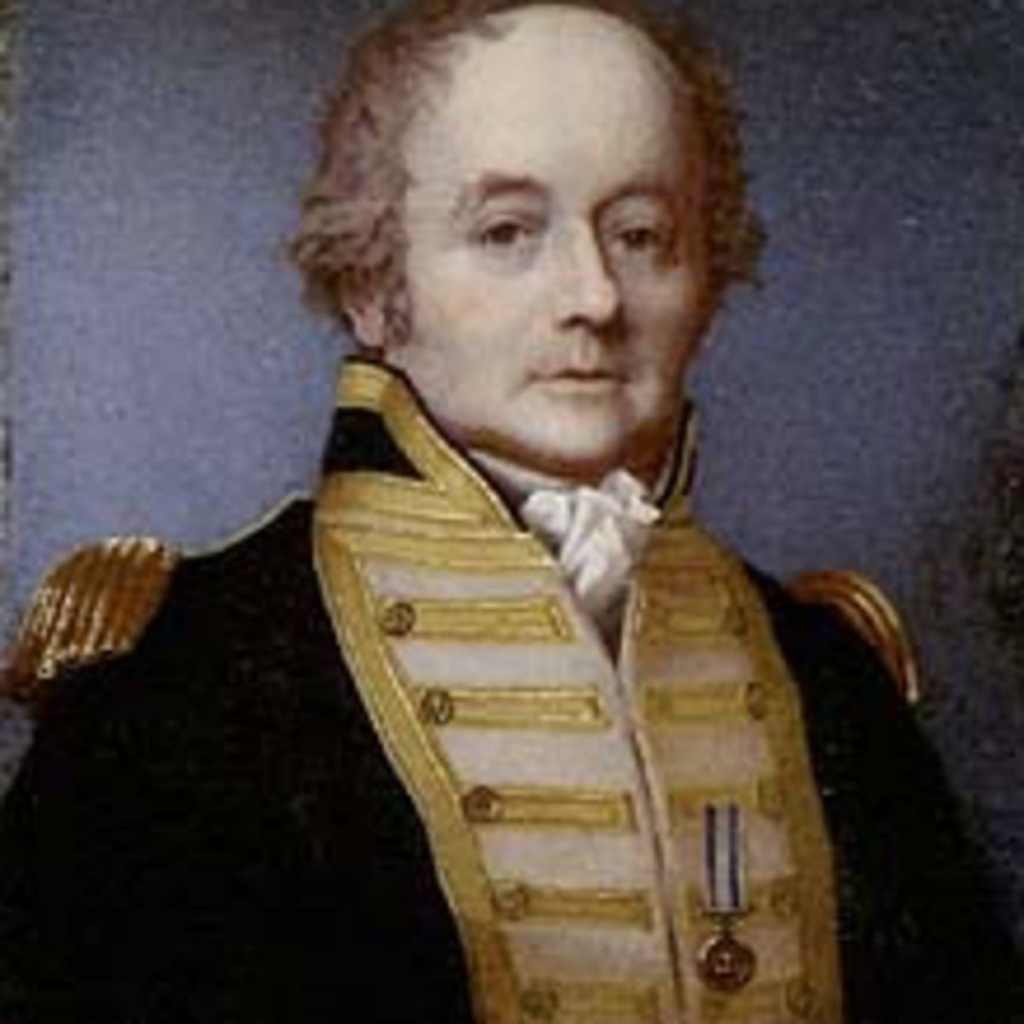
There is no portrait or drawing extant of Fletcher Christian that was drawn from life. Bligh described Christian as “5 ft. 9 in. high [175 cm]. blackish or very dark complexion. Hair – Blackish or very dark brown. Make – Strong. A star tattooed on his left breast, and tattooed on the backside. His knees stand a little out and he may be called a little bow legged.
 Author Brian Kermode