
When you resettle to a different location, whether it’s for work or just an easier way of life, the first thing that springs to mind is…what’s it going to be like now that I have moved?
Well, as the story goes, I relocated to Inishowen in County Donegal, just a couple of years before that dreaded Covid struck in 2019, and to say I was mesmerised by the stunning scenery on offer, well, that would be an understatement. On a journey through the north end of the peninsula one day…I stumbled across a quaint and quite beautiful, hidden bay.
Stretching my legs, I discovered a plaque bearing the name…’La Trinidad Valencera’. Now, as it happens, I am very interested in history and this plaque offered more than just a name, there was a story here. Hence, it was off to do some research on a stricken galleon from the Spanish Armada that met its watery grave on the north end of Inishowen, in a place called…Kinnagoe Bay.
From research, I uncovered that the ‘La Trinidad Valencera’ was originally a 1,000 tonne Venetian merchant ship, commandeered for the Spanish Armada in Sicily. In 1588, Spain was at war with England and gathered a flotilla of over 130 ships with the intention of invading England. Under the command of the Duke of Medina-Sidonia, the vast Armada set sail from Lisbon, Portugal in May of that year, bound for the English Channel with the intention of taking control of the waters in readiness for a land invasion.
With a crew of over 400 sailors and soldiers on board, ‘La Trinidad Valencera’ and the rest of the Spanish Armada were intercepted by the Royal Navy led by Sir Francis Drake and Lord Charles Howard in the English Channel. Having gained information from English spies in Spain that an invasion was imminent, the Royal Navy had gathered around 40 warships and some several dozen armed merchant vessels, ready for battle with the Armada. By July 1588, the Armada was spotted off the coast of Plymouth and the Royal Navy raced out to meet them with almost 100 ships. The Spanish were well drilled for boarding and close combat fighting, but the English instead had installed heavy cannons on their ships. It was then just a matter of bombarding the Armada from a distance to achieve maximum damage to the fleet. Although many ships were badly damaged and sunk by the English, the Armada’s defensive system held fast and a series of naval battles took place off the Isle of Wight and Portland Bill. By August of that year, due to heavy losses, the Spanish had retreated back and dropped anchor off the coast of France where the Duke of Modina-Sidonia hoped to pick up the Duke of Parma’s invasion army based in Holland.
Not wanting the Spanish uniting their forces, Howard and Drake devised a last-ditch plan to scatter the Armada. At midnight on August 8, the English set eight empty vessels ablaze and allowed the wind and tide to carry them toward the Spanish fleet anchored off the French Coast near Calais. In a state of panic at the incoming ships on fire, the Spanish cut their anchors to avoid catching fire and set sail for the open seas. At dawn on August 8th, in what became known as the Battle of Gravelines, the Royal Navy engaged the Spanish fleet and bombarded them with salvos of cannon fire.
With many ships now damaged or sunk, the weather suddenly changed and shortly after the Battle of Gravelines, a gale force wind carried the Armada into the North Sea, wiping out any chance of meeting up with the Duke of Parma’s army. With supplies running low and disease beginning to spread through his fleet, the Duke of Medina-Sidonia resolved to abandon the invasion mission and return to Spain by sailing around Scotland and Ireland.
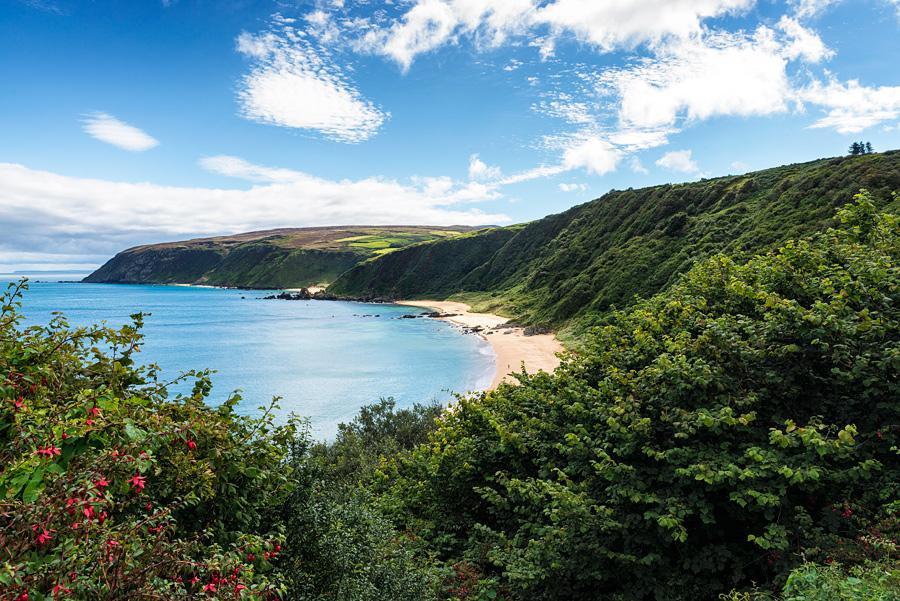
On the 12th September, the ‘La Trinidad Valencera’ rounded the coast of Ireland but ran into another heavy storm and sank off Kinnagoe Bay. There was enough time though for over 400 crew and soldiers to abandon ship and swim ashore. However, as fate would have it, the Earl of Tyrone, Hugh O’Neill, was loyal to the English Crown. His militia massacred some 300 of the surviving soldiers and buried them in two unmarked graves in County Donegal. They say war is cruel and unjust and so it should be. If you’re passing through this part of the world at any time in the future, stop and think about the men that survived countless battles, a raging sea, then swimming through strong currents, to eventually being executed after thinking they were safe on the shores of Ireland. It’s thought that more than 20 of the original Armada got shipwrecked off the coast but a lot of sailors and soldiers managed to survive in different places around Ireland. There is talk in small villages around the coast from the elder folk, from stories passed down through generations, that a lot of these survivors remained hidden in Ireland and settled among the local communities. No matter where we go on our travels, even in the most isolated of places, there is almost certain to be a hidden story to be told.
Visit my website www.briankermode.com to check out my new novel ‘The Rising Sun of Inishowen’
History Source : Wikipedia
Images : Irish History Podcast & Wild Atlantic Way
 Author Brian Kermode