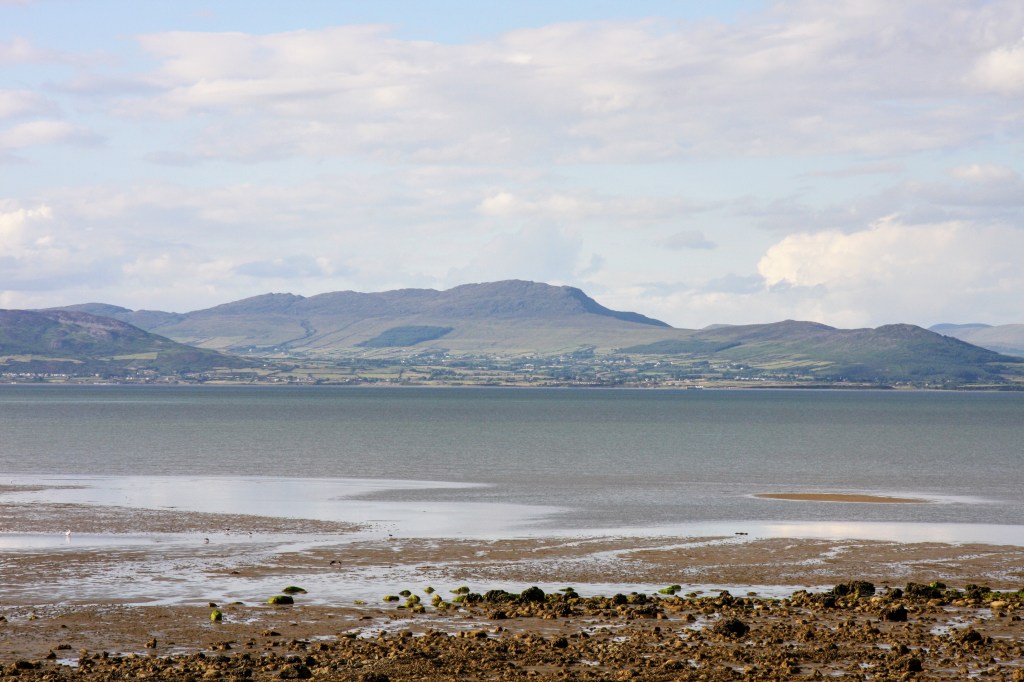
Cú Chulainn: The Legendary Hero of Irish Folklore
In the rich tapestry of Irish mythology, few figures stand out as prominently as Cú Chulainn. His tale is one of heroism, tragedy, and supernatural prowess, embodying the spirit of ancient Ireland. From his miraculous birth to his untimely death, Cú Chulainn’s story captivates the imagination and provides a window into the values and culture of the Celts. My post will delve into the life, exploits, and enduring legacy of this legendary hero.
The Miraculous Birth of Cú Chulainn
Cú Chulainn’s origins are as mystical as his life. Born as Sétanta, he was the son of Deichtine, sister of King Conchobar mac Nessa of Ulster, and either the god Lugh or the mortal Sualtam. The duality of his parentage, divine and mortal, set the stage for his extraordinary destiny. His birth was marked by omens and portents, signalling the arrival of a hero destined to shape the fate of Ireland.
According to the legends, Sétanta exhibited enormous strength, and bravery from a young age. He was known for his exceptional skills in hurling, a traditional Irish sport, and his insatiable curiosity about the world around him. These traits foreshadowed the great warrior he would become.
The Name Cú Chulainn
Sétanta’s transformation into Cú Chulainn is one of the most famous episodes in this legend. As a young boy, he joined the warriors of King Conchobar at Emain Macha, the royal court of Ulster. On his way to the court, he encountered the fierce guard dog of Chulainn, the blacksmith. The dog attacked Sétanta, but with his supernatural strength and agility, he killed the beast in self-defence.
Chulainn, distressed over the loss of his guardian, was offered a replacement by Sétanta. The young hero vowed to serve as Chulainn’s guard dog until a new one could be trained. From that day on, Sétanta was known as Cú Chulainn, meaning ‘The Hound of Chulainn.’ This act of loyalty and courage solidified his reputation, and marked the beginning of his legendary status.
The Training of a Hero
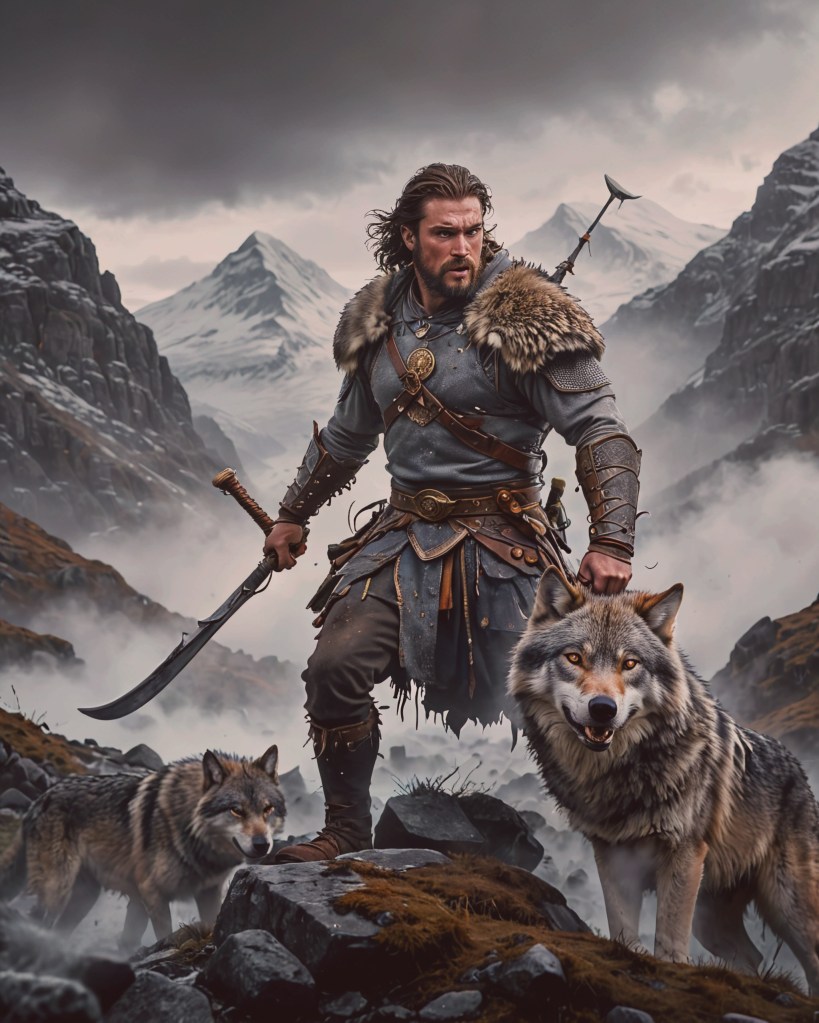
Cú Chulainn’s path to becoming a warrior was marked by rigorous training, and supernatural experiences. He sought the tutelage of the warrior-woman Scáthach, who resided on the Isle of Skye. Under her guidance, he learned the arts of combat, strategy, and the use of mystical weapons. It was here that he acquired the deadly spear Gáe Bolg, a weapon that could inflict fatal wounds with a single strike.
During his training, Cú Chulainn also encountered Aife, Scáthach’s rival. The two warriors clashed in a fierce battle, but Cú Chulainn emerged victorious, using both his martial skills and cunning. He fathered a son with Aife, named Connla, who would later play a tragic role in his father’s story.
The Cattle Raid of Cooley
The most famous saga featuring Cú Chulainn is the Táin Bó Cúailnge, or the Cattle Raid of Cooley in County Louth. This epic tale is central to the Ulster Cycle, a collection of legends about the heroes of Ulster. The story begins with Queen Méabh of Connacht seeking to steal the prized brown bull of Cooley to match her husband Ailill’s wealth. The theft sets off a massive conflict between the kingdoms of Connacht and Ulster.
Cú Chulainn, despite being only seventeen, single-handedly defended Ulster against the invading forces. Due to a curse placed upon the Ulstermen, they were incapacitated and unable to fight, leaving Cú Chulainn to face the Connacht army alone. Employing guerrilla tactics, he engaged the enemy in a series of single combats, delaying their advance and inflicting heavy losses.
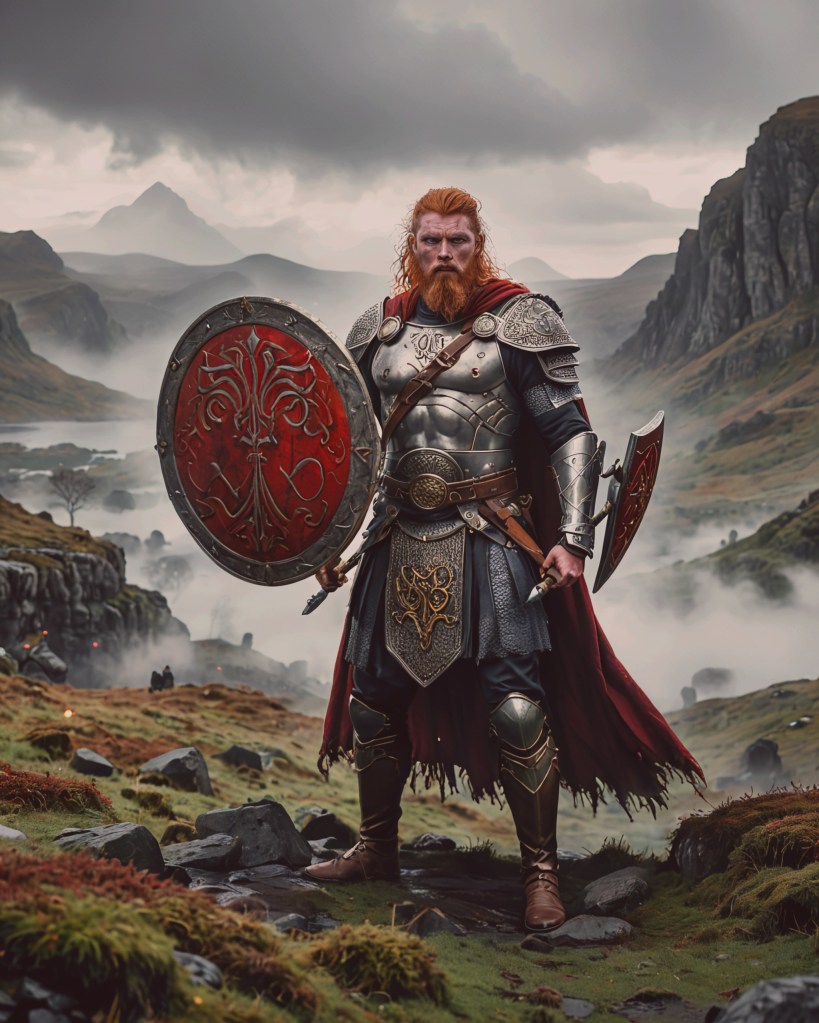
One of the most poignant episodes in this saga is Cú Chulainn’s duel with his foster brother and best friend, Ferdiad. The two warriors, bound by deep mutual respect and affection, were forced to fight to the death. After a brutal and heart-wrenching battle, Cú Chulainn emerged victorious, but the emotional toll of killing his beloved friend, and foster brother, haunted him deeply.
The Warp-Spasm and Supernatural Feats
Cú Chulainn’s abilities were not confined to mortal limits. He was known for his ríastrad, or warp-spasm, a supernatural transformation that endowed him with immense strength and a terrifying appearance. During these episodes, his body would contort and expand, his hair would stand on end, and his eyes would bulge with fury. In this state, he became an unstoppable force, capable of decimating entire armies on his own.
This ability, coupled with his martial prowess, made Cú Chulainn a figure of awe and dread. His legendary exploits included fending off entire battalions, performing incredible feats of strength, and wielding the Gáe Bolg with lethal precision. His legend spread far and wide, cementing his status as the greatest warrior of his age.
The Tragic Fate of Cú Chulainn
Despite his invincibility in battle, Cú Chulainn’s life was marred by tragedy. The prophecy of his short but glorious life loomed over him, a constant reminder of his mortality. His death was foretold to occur when the Morrígan, the goddess of fate and war, would appear to claim him.
The culmination of his tragic fate began with a series of omens and betrayals. His beloved wife Eimear, his trusted companions, and even the gods themselves could not alter his destiny. The turning point came when his enemies conspired to defeat him through deceit and overwhelming numbers.
In his final battle, Cú Chulainn was mortally wounded. Refusing to die on the ground, he tied himself to a standing stone, determined to face his enemies with his last breath. Even in death, his presence was so formidable that his enemies hesitated to approach him until a raven, a symbol of the Morrígan, landed on his shoulder, signifying his demise.
The Legacy of Cú Chulainn
Cú Chulainn’s legacy endures in Irish culture and beyond. His story has been passed down through generations, celebrated in songs, poems, and literature. He embodies the unique hero, marked by bravery, loyalty, and a tragic destiny. His life and exploits reflect the values of ancient Irish society, where honour, strength, and loyalty were paramount.
In modern times, Cú Chulainn’s image has been invoked in various cultural and political contexts. He has been a symbol of resistance and heroism, representing the indomitable spirit of the Irish people. Statues and monuments dedicated to him can be found across Ireland, serving as a testament to his enduring influence.
Cú Chulainn in Popular Culture
The legend of Cú Chulainn has also found its way into popular culture, inspiring works of art, literature, and even video games. His story has been retold in various forms, from epic poems like ‘The Táin’ to modern novels and graphic novels. The character’s appeal lies in his complex nature—both a fierce warrior and a tragic figure, embodying the timeless struggle between fate and free will.
Conclusion
Cú Chulainn’s tale is a cornerstone of Irish mythology, a blend of heroism, tragedy, and supernatural wonder. His journey from a miraculous birth to a legendary warrior and his tragic demise captures the essence of the Celtic spirit. As a symbol of bravery, loyalty, and resilience, Cú Chulainn’s legacy continues to resonate, reminding us of the enduring power of myth and the timeless appeal of a hero’s story.
In exploring the life and legend of Cú Chulainn, we gain insight not only into ancient Irish culture but also into the universal themes of heroism, sacrifice, and the human condition. His story, like all great myths, transcends time and place, offering inspiration and reflection for generations to come.
 Author Brian Kermode